

You can also download this guide as a pdf if you wish.
Many chronic conditions, such as heart and lung diseases, can cause breathlessness.
Breathlessness can be frightening and distressing even in mild cases and can be made worse by the way you breathe, the way you function and the way you think.
A better understanding about this can help you stay in control.
Breathlessness can be influenced by three interlinked factors: breathing, thinking and functioning. Inefficient or increased work of breathing can make breathlessness worse, while distressing thoughts and anxiety can increase feelings of panic and make it harder to regain control of breathing.
Breathlessness may also lead us to avoid activities, become less active and rely more on others, which can cause physical deconditioning and further increase breathlessness. Thus, each area can reinforce the others, creating a cycle that maintains or worsens breathlessness.
This cycle can be broken and breathlessness managed by using simple strategies to gain control again.
When breathless you may find you over breath, using chest and shoulder muscles which use oxygen and tire quickly. This can make breathing more difficult.
This cycle can be broken and breathlessness managed by using simple strategies to gain control again.
Four F’s
1. Fan
The use of fans is not recommended during the coronavirus outbreak due to the risk of it spreading infection.
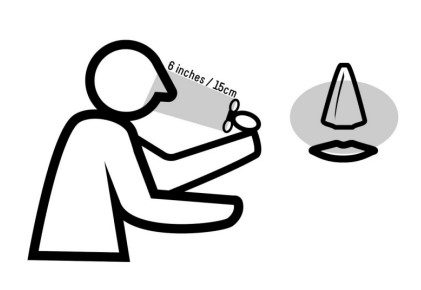
Using the hand held fan is portable and can be used anywhere. Directed on the cheeks, and nose stimulates nerves that supply part of the brain to reduce the perception of breathlessness. Held at about 6 inches for 2-5mins is most effective.
2. Flop
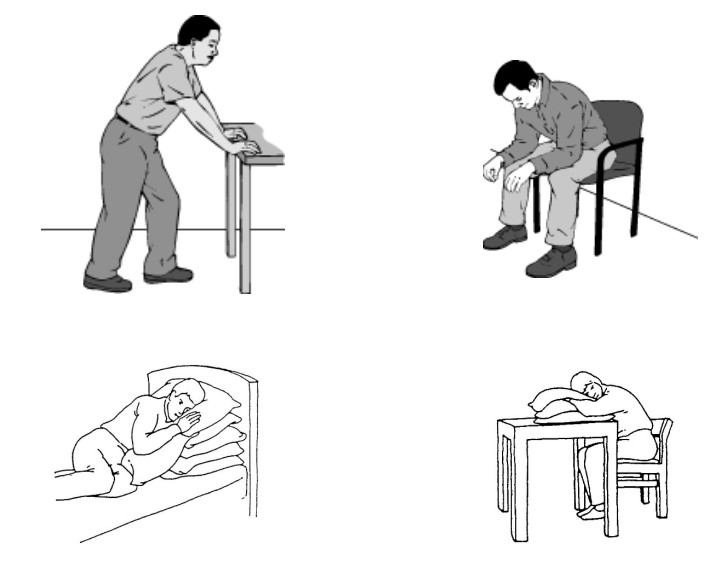
When breathless, trying to relax into a chair can relax your breathing too. Relax your hands, jaw, toes, arms and shoulders. Muscles use less oxygen when they are relaxed. (See positions below)
3. Forward leaning
Leaning forward, supported on your arms or hands enables the chest to expand efficiently at the top and the bottom.
These are good positions you can try:
4. Focus on breathing out
When breathless we fill the lungs with lots of air which makes it difficult to get more in. By focussing on breathing out helps to relax the breathing as well as getting more air out so you can then take more air in. Try picturing a rectangle, trace your eyes up the short side whilst breathing in, and trace your eyes along the long side when breathing out. Breathe out as if you are blowing out a candle. Make the breath out longer than the breath in. Briefly pause at the corners.
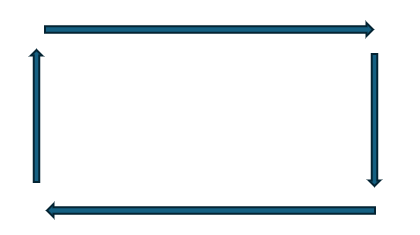
Along the long side of the rectangle, breathe out for 2 and then breathe in for 1 on the shorter side.
Not all of these strategies will be useful but try to see what works best for you.