

"There’s something so hopeful about spring," says Hospice Head Gardener, Anneke. "The days get lighter, animals emerge from winter hibernation and spending time outdoors becomes something to enjoy."
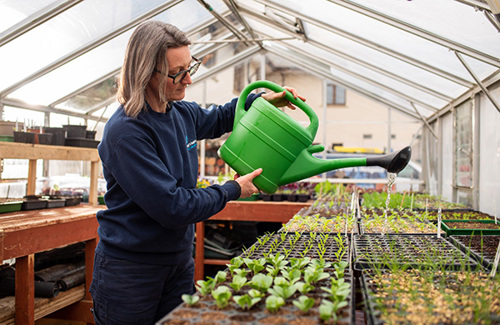
Follow Anneke's top tips to make your garden wildlife-friendly and spring-ready:
1. Choose pollinator-friendly plants. We've got snowdrops, tulips and daffodils in the Hospice gardens which bloom every spring. As they flower, insects like bees and butterflies start to feed on them, which helps pollinate other plants.
You'd normally plant bulbs in autumn and winter if you want them to flower in spring, but it's not too late to buy potted versions or bulbs 'in the green'. Don't hesitate to ask your local garden centre for help when choosing something pollinator-friendly.
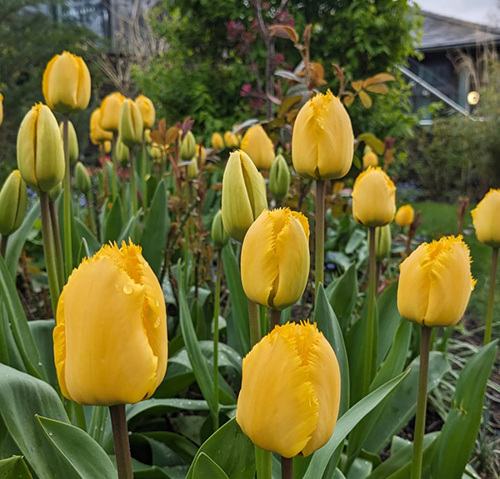
Tulips at the Hospice
2. Start a mini herb garden. Treat your tastebuds by planting dill and hyssop in April or early May, after the last frost. They're cheap, simple to grow and great for pollinators. They don't take up too much space, so they're perfect for growing on a balcony or in a small garden border.
3. Build a habitat pile. After we've trimmed the hedges and trees, we stack our woody prunings to make a 'habitat pile' which provides shelter for insects, amphibians and small mammals. If you don't have enough material at home to make one, you can also leave a corner of your garden unmown.
We've got an area full of daisies, clover and buttercups in the Hospice gardens. Although some consider them weeds, they offer important food, shelter and a breeding ground for insects, that in turn provide food for birds and hedgehogs.
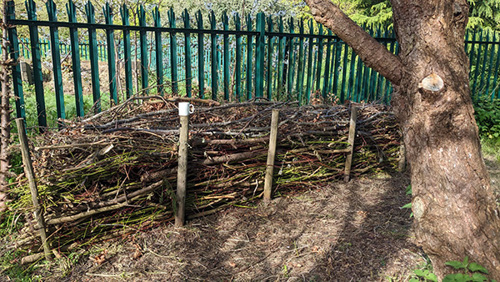
A habitat pile built by Anneke and volunteers
4. Create a hedgehog haven. Hedgehogs usually come out of winter hibernation around March or April, when they'll start looking for food and places to nest. You can encourage these vulnerable mammals by cutting a 13cm square hole in fences, to create a 'hedgehog highway' that helps them to travel between gardens.
At the Hospice, we have hedgehog boxes which offer them shelter and we always check for hedgehogs before mowing or strimming, to avoid injuring wildlife.
5. Add a pond. Providing a water source is a great way to encourage more wildlife into your garden. We have a small pond at the Hospice and if you look closely, you might spot some of the frogs taking a dip!
Just make sure your pond is kept clean and the sides aren't too steep. Add some rocks and branches so that small animals can climb out if they fall in.
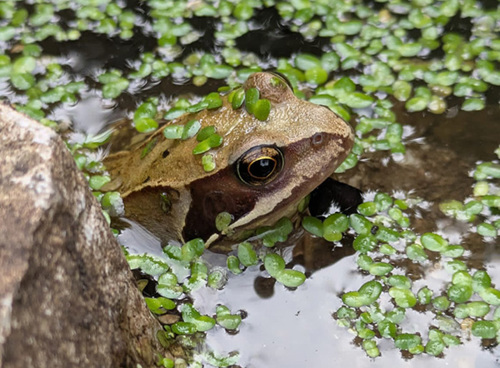
A frog enjoying the Hospice pond
In just a few simple steps, you can transform your garden this spring. It's the season when nature really comes to life, so why not make the most of it?
If you'd like to visit the Hospice Garden, keep an eye on our Open Gardens page for new dates:
Back to News
Assessors from Royal Horticultural Society visited us to see some of our volunteers hard at work and learn about what we do.
Continue reading
We recently had a visit from Ming, Chloe and a group from the local Chinese Community Wellbeing society, who came along to the Hospice to learn more about our services.
Continue reading
One of our garden Volunteers, Den, recently attended the 2024 Bee Bold Awards to collect an award on behalf of the Hospice.
Continue reading
